

Government grants can help fund building renovations, accessibility improvements, energy-efficiency upgrades, and community development projects. But before applying for funding, it’s important to understand whether your building and proposed improvements are actually eligible.
For nonprofits, municipalities, schools, community organizations, and commercial property owners, government grants can make otherwise unaffordable construction projects possible. However, qualifying for a building improvement grant involves more than simply finding a funding opportunity and submitting an application.
The building itself, its current condition, its intended use, the proposed improvements, and the organization’s eligibility can all influence whether a project qualifies.
This is where an architect can make a meaningful difference.
An experienced architect can evaluate an existing building, identify potential obstacles, develop realistic renovation plans, and help property owners prepare the technical documentation often needed for grant applications.
So, how do you know whether your building might qualify for government funding?
Let’s look at what architects evaluate before a grant-funded construction project gets underway.
1. What Types of Buildings Can Qualify for Government Grants?
One of the first things to understand is that government grants are typically awarded based on the purpose of a project, the organization applying, and the specific funding program—not simply because a building needs repairs.
Different programs support different types of facilities and improvements.
Community and Public Buildings
Buildings that provide essential services to communities are often strong candidates for certain government funding programs.
Examples include:
Fire stations and emergency response facilities
Public libraries
Community centers
Municipal buildings
Public safety facilities
Rural healthcare facilities
Public works buildings
Senior centers
Community recreation facilities
Programs supporting rural development, public infrastructure, and community services may offer funding opportunities for these types of projects.
For example, the USDA Community Facilities Direct Loan & Grant Program supports eligible essential community facilities in qualifying rural areas.
Nonprofit and Charitable Facilities
Nonprofit organizations may qualify for certain grants when their buildings support services that benefit the public.
Potential projects include:
Food banks and distribution centers
Homeless shelters
Youth development centers
Community outreach facilities
Transitional housing
Educational and training facilities
Facilities serving individuals with disabilities
Eligibility often depends on the organization’s legal status, its mission, the community being served, and the requirements of the particular grant.
Historic Buildings
Historic preservation grants may help fund projects involving buildings with recognized historical or architectural significance.
Depending on the program, eligible improvements might include:
Structural stabilization
Exterior restoration
Historic window rehabilitation
Roof replacement
Preservation of significant architectural features
Improvements necessary to support continued building use
Historic preservation funding frequently includes restrictions on how work can be performed. An architect familiar with historic rehabilitation can help balance preservation requirements with modern building codes and accessibility needs.
Commercial Buildings
Can a privately owned commercial building qualify for government grants?
Sometimes, but eligibility is generally more limited and program-specific.
Certain economic development, downtown revitalization, energy-efficiency, and business assistance programs may support improvements to privately owned properties.
However, many public infrastructure and community facility grants are not available to ordinary for-profit commercial developments.
The key is identifying programs that specifically permit private-sector participation.
2. What Is the Current Condition of Your Building?

Before developing a grant-funded renovation project, an architect needs to understand what already exists.
A building that appears structurally sound from the outside may have significant issues hidden behind walls, above ceilings, or within mechanical systems.
An initial architectural assessment may examine:
General building condition
Roof age and visible deterioration
Exterior walls and building envelope
Interior layouts and space utilization
Accessibility barriers
Fire and life safety conditions
Heating, ventilation, and air conditioning systems
Electrical and plumbing infrastructure
Visible structural concerns
Site access, parking, and drainage
Depending on the findings, additional evaluations by structural engineers, mechanical engineers, environmental consultants, or other specialists may be necessary.
Why Does Building Condition Matter for Grants?
Many funding programs require applicants to demonstrate that the proposed improvements address an identifiable need.
For example, consider a rural community center with an aging roof, inadequate restrooms, and an outdated heating system.
Simply stating that the building needs improvements may not provide enough information to support a competitive grant application.
A documented building assessment can help establish:
What problems currently exist.
Why those problems need to be addressed.
How the proposed improvements will solve them.
Whether the building is suitable for renovation.
What the improvements are likely to cost.
This information can help funding agencies evaluate the project’s necessity, feasibility, and potential community impact.
Practical Tip: Before applying for a building renovation grant, consider commissioning a preliminary architectural assessment. Identifying major deficiencies early can prevent you from pursuing funding for a project that is more complicated or expensive than anticipated.
3. Does Your Building Meet Accessibility Requirements?
Accessibility is one of the most important considerations when evaluating an existing building for renovation.
Many older buildings were constructed before modern accessibility standards were adopted.
As a result, they may contain barriers that make it difficult or impossible for individuals with disabilities to access certain areas or services.
Common accessibility concerns include:
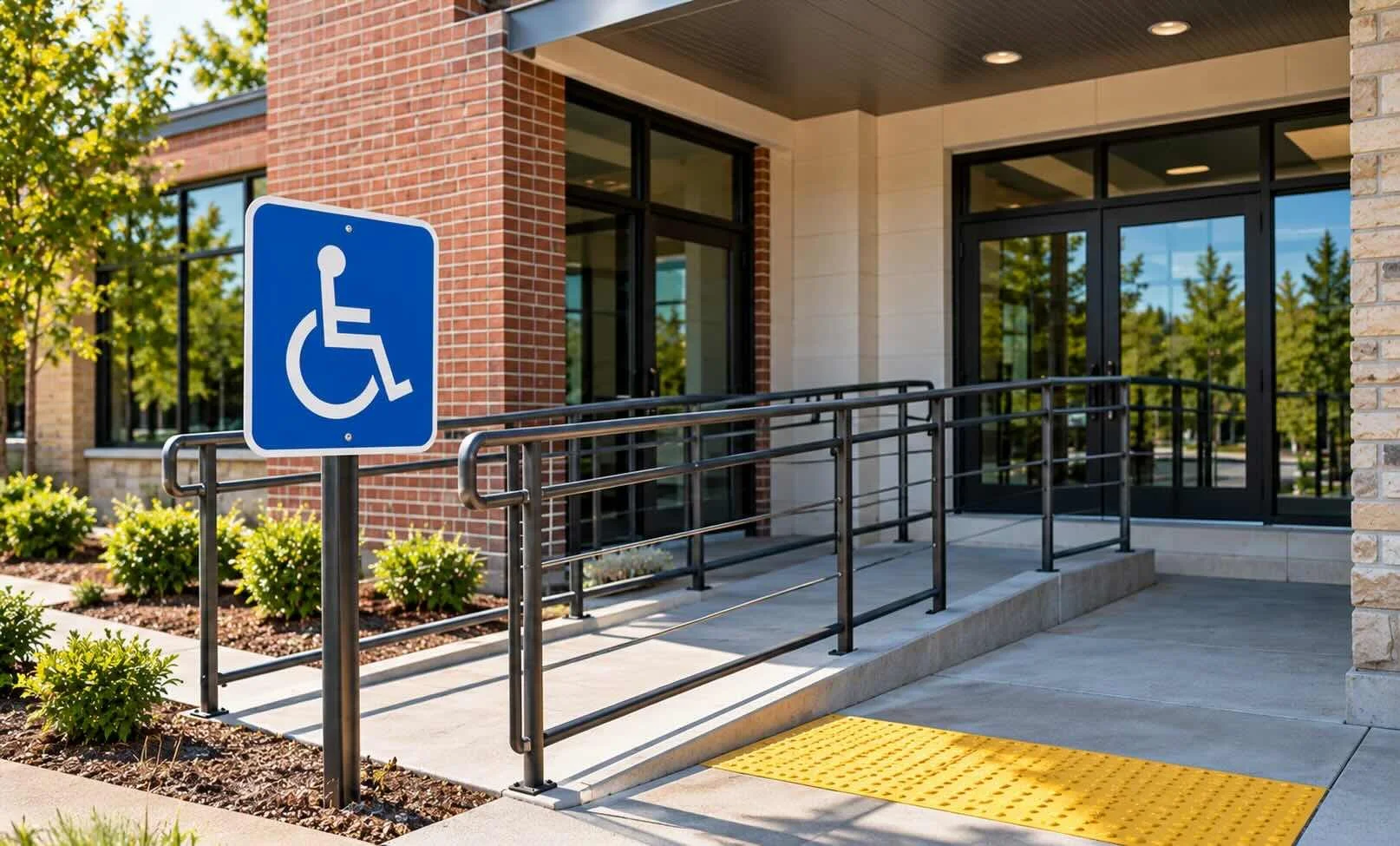
Entrances with stairs but no accessible route
Doorways that are too narrow
Restrooms that lack adequate maneuvering space
Inaccessible parking areas
Improper ramp slopes
Missing accessible signage
Inadequate routes between building spaces
Service counters that are difficult to access
Can Accessibility Improvements Qualify for Government Grants?
Yes. Certain government funding programs specifically support accessibility improvements, while others allow accessibility upgrades as part of a larger renovation project.
Potential improvements include accessible entrances, restroom renovations, elevators, lifts, and modifications to circulation routes.
However, funding availability depends on the particular grant program.
What Architects Evaluate
An architect can review existing conditions and determine which improvements may be necessary under applicable accessibility requirements.
Depending on the project, these may include:
The Americans with Disabilities Act (ADA)
Applicable state accessibility requirements
Locally adopted building codes
Accessibility provisions triggered by alterations or changes in occupancy
It’s important to recognize that receiving a government grant does not automatically mean a building complies with accessibility requirements.
Likewise, grant funding does not eliminate the owner’s responsibility to comply with applicable laws.
Evaluating accessibility early helps establish a more complete project scope and reduces the likelihood of unexpected improvements being discovered during permitting.
4. Is the Proposed Project Allowed Under Local Zoning and Building Codes?
One of the biggest mistakes organizations make when pursuing government grants is assuming that funding approval means their proposed project can legally be constructed.
Unfortunately, that isn’t always the case.
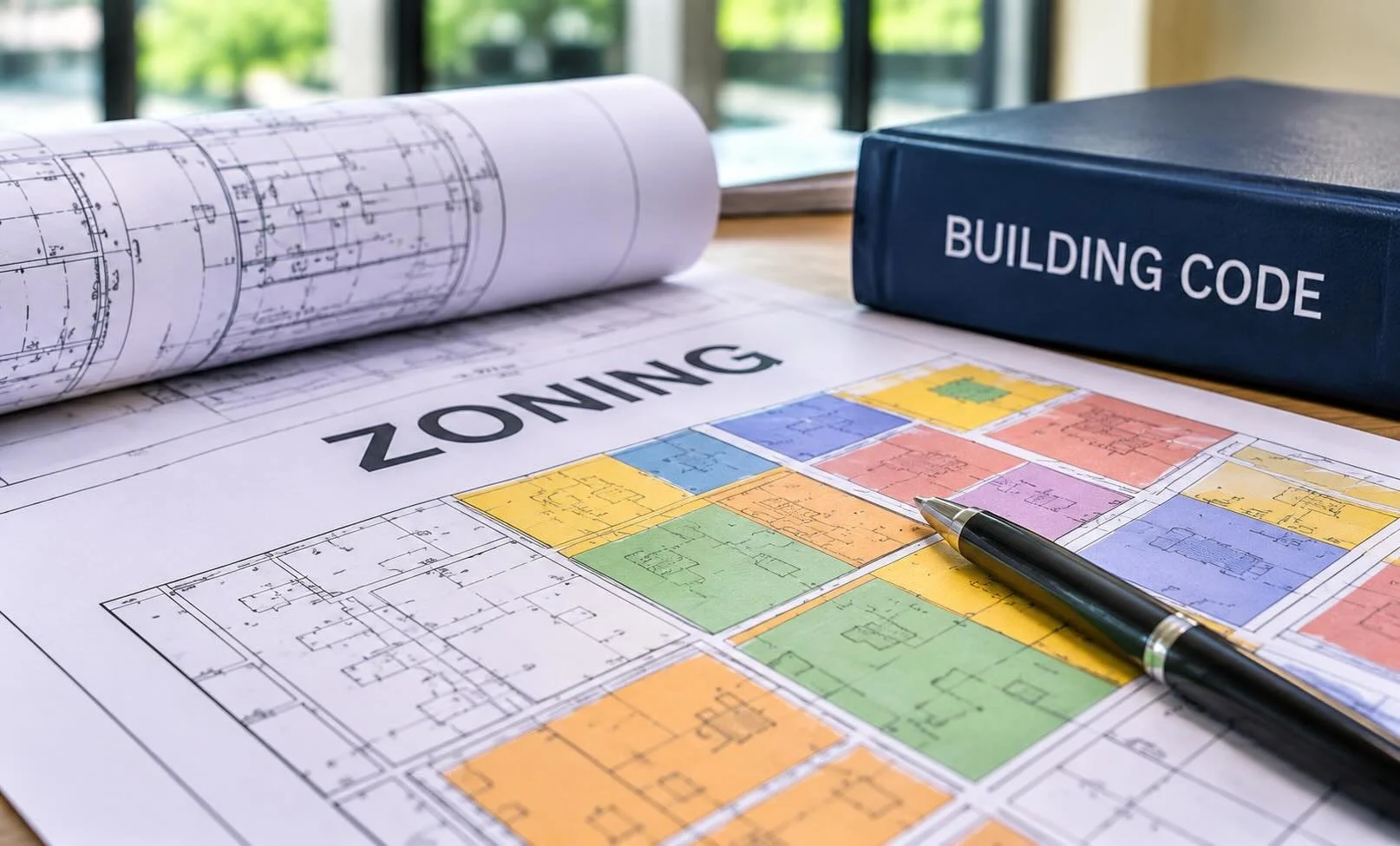
Before developing a grant application, an architect should evaluate whether the intended use and proposed improvements are permitted.
Zoning Considerations
Local zoning regulations determine how property may be used.
For example, an organization may want to convert an existing commercial building into a community outreach center.
Before moving forward, important questions include:
Is the proposed use permitted in the zoning district?
Are additional parking spaces required?
Will a conditional use permit be necessary?
Are there restrictions on building expansion?
Do landscaping or site improvements need to be addressed?
Are there limitations related to setbacks or building height?
A project that requires substantial zoning approvals may still be feasible, but those requirements should be understood before grant deadlines approach.
Building Code Considerations
An architect also evaluates how the proposed work interacts with applicable building codes.
Potential concerns include:
Occupancy classifications
Occupant loads
Fire-rated construction
Emergency exits
Fire sprinkler requirements
Structural modifications
Energy code compliance
Accessibility requirements
For example, converting an office building into a childcare facility may trigger requirements that were not applicable to the building’s previous use.
Those requirements can significantly affect renovation costs.
Practical Tip: If your grant proposal involves changing how a building is used, have an architect evaluate the potential change-of-occupancy requirements before finalizing your budget.
5. Can the Building Realistically Support the Proposed Improvements?
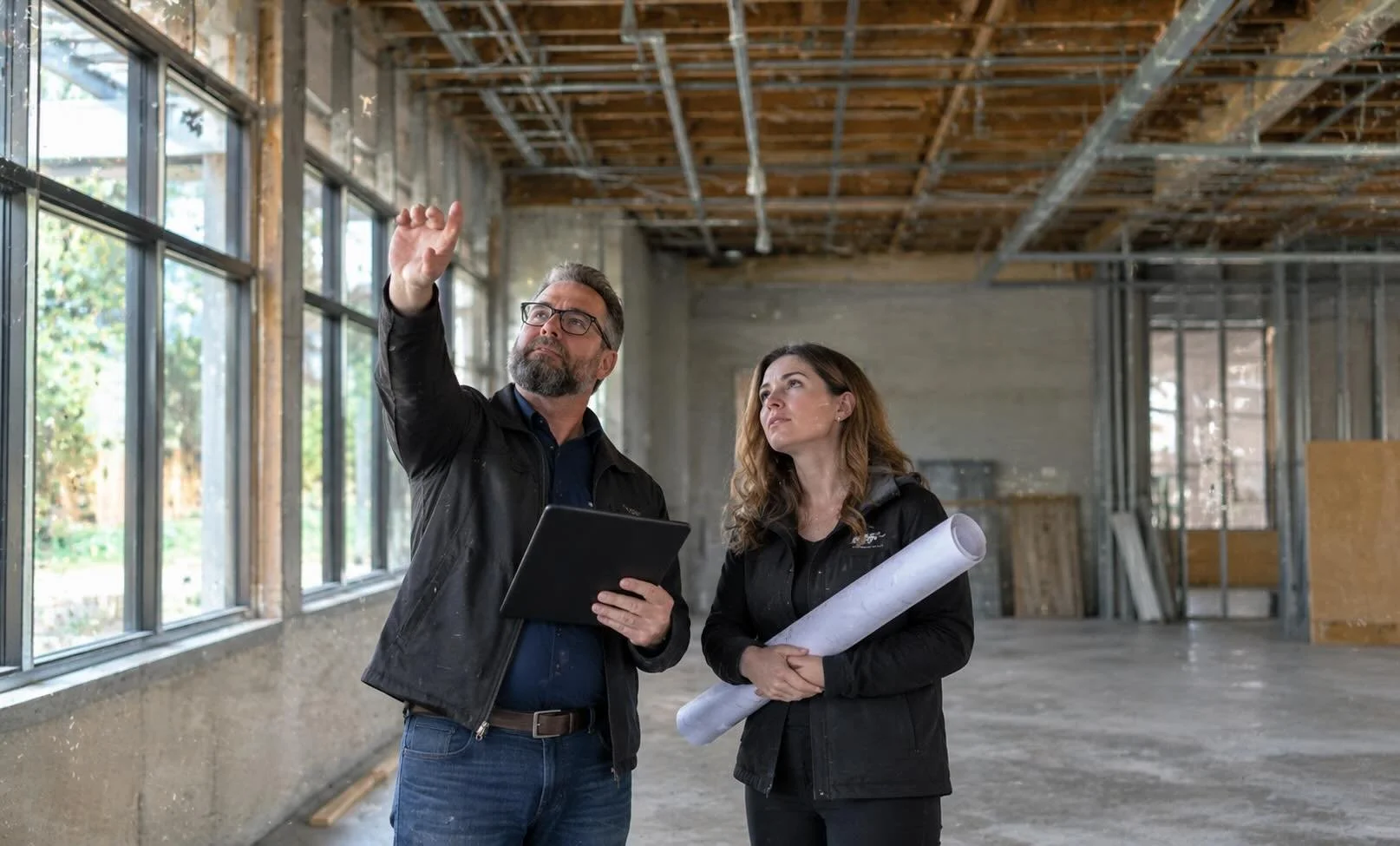
A building may qualify for a particular funding program but still be a poor candidate for the proposed renovation.
This is why architectural feasibility studies are valuable.
A feasibility study helps answer a fundamental question:
Can the project actually be completed within the building’s physical, regulatory, and financial limitations?
Consider a nonprofit organization planning to renovate an older building into a community healthcare facility.
The existing structure may have:
Insufficient electrical capacity
Inadequate ventilation
Limited accessible parking
Narrow corridors
An inefficient floor plan
Structural limitations that restrict renovations
An architect can help determine whether these issues can be reasonably addressed. Sometimes, a relatively straightforward renovation is possible. Other times, the proposed use may require extensive modifications that make the project financially impractical.
In certain situations, constructing a new building may be more cost-effective than renovating the existing one. Understanding these possibilities before applying for funding allows organizations to make more informed decisions.
6. How Much Will the Project Actually Cost?
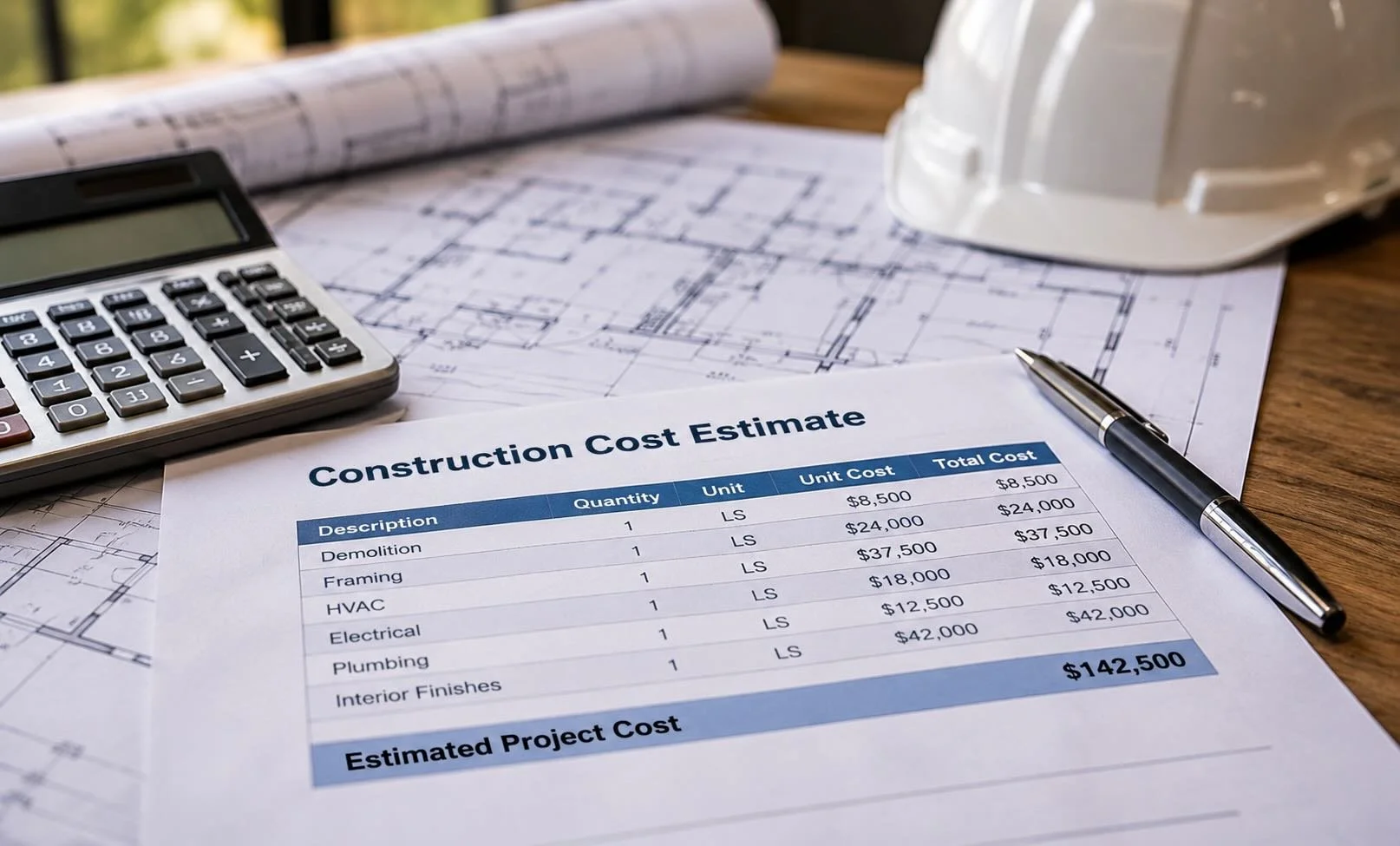
One of the most important components of a construction grant application is a realistic project budget.
Grant applications frequently require applicants to provide estimated project costs, explain how funding will be used, and demonstrate that the project can be completed with the available resources.
Unfortunately, building renovation costs are often underestimated.
What Should a Grant-Funded Construction Budget Include?
Depending on the project, a comprehensive budget may need to account for:
| Expense Category | Potential Costs |
|---|---|
| Architectural Services | Existing-condition documentation, design, construction documents, permitting assistance |
| Engineering Services | Structural, mechanical, electrical, plumbing, and civil engineering |
| Construction | Labor, materials, equipment, and contractor expenses |
| Site Improvements | Parking, drainage, utilities, sidewalks, and landscaping |
| Permits and Reviews | Building permits, planning approvals, and applicable review fees |
| Environmental Services | Testing, assessments, and remediation when required |
| Accessibility Upgrades | Accessible entrances, restrooms, ramps, elevators, and related improvements |
| Contingency | Allowances for unforeseen conditions and eligible cost increases |
| Equipment and Furnishings | Items necessary for building operations, when permitted by the funding program |
Not every expense will qualify for reimbursement under every grant.
For example, some programs allow architectural and engineering fees to be included as eligible project expenses, while others limit how funds may be spent.
Why Preliminary Cost Estimates Matter
Imagine an organization applies for a $500,000 renovation grant.
After receiving funding, the organization discovers that required structural upgrades, accessibility improvements, and mechanical replacements increase the total project cost to $850,000.
That additional $350,000 must come from somewhere.
Depending on the grant terms, the organization may need to secure additional funding, reduce the project scope, or request approval to modify the project.
A preliminary architectural evaluation and appropriately developed cost estimate can help reduce these surprises.
Practical Tip: Build a realistic contingency into your preliminary budget, particularly when renovating older buildings. The appropriate amount depends on the project’s complexity, the quality of existing-condition information, and the funding program’s rules.
7. Does the Project Provide a Measurable Community Benefit?
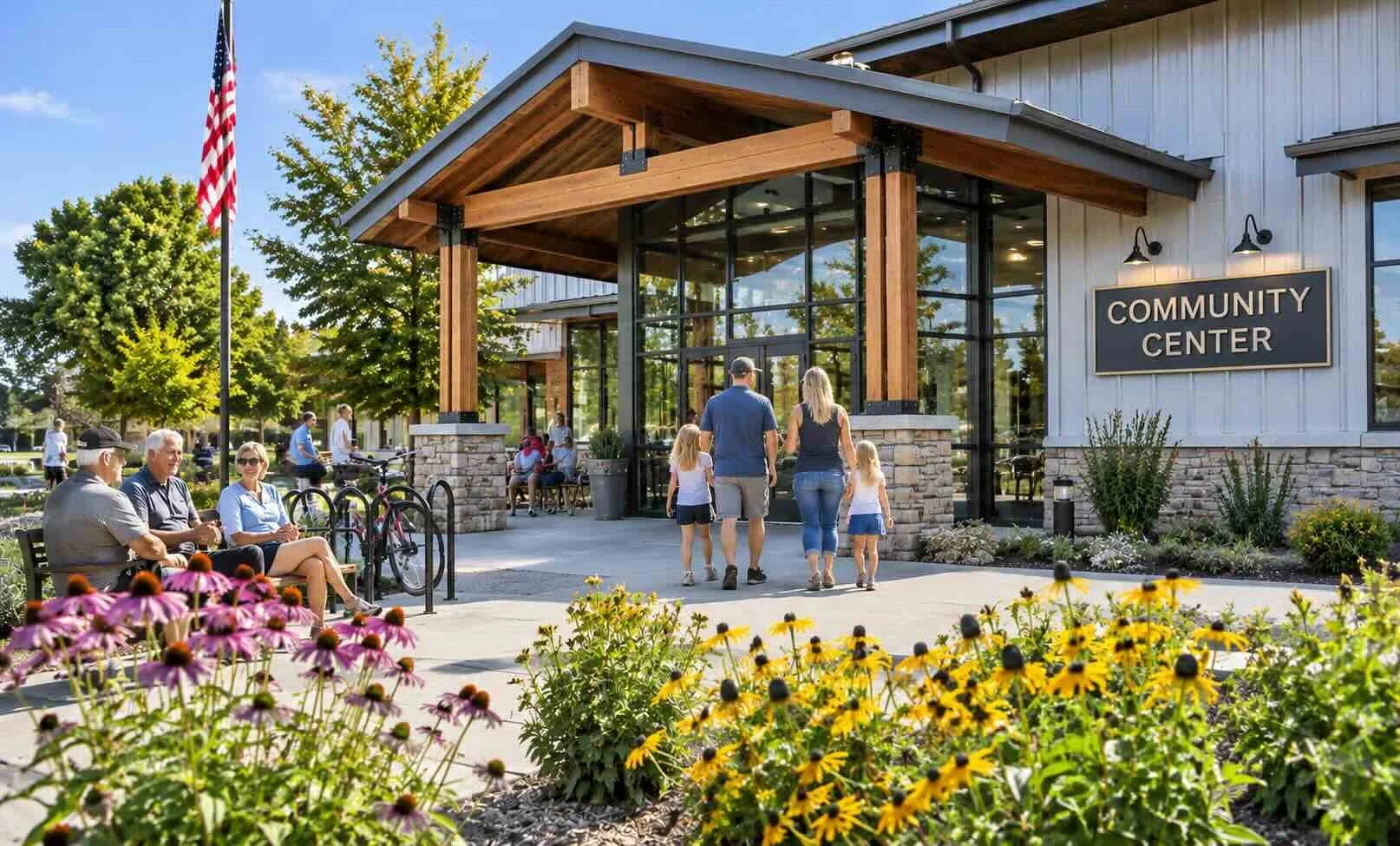
Many government grant programs prioritize projects that provide meaningful benefits to the communities they serve.
This is especially common with funding intended for rural development, public facilities, community services, and economic revitalization.
A strong application should explain not only what improvements will be made, but also why those improvements matter.
Examples of Community Benefits
Public Safety
Renovating an outdated fire station may improve emergency response operations, accommodate modern equipment, and provide safer working conditions for first responders.
Healthcare Access
Expanding a rural healthcare facility may allow an organization to serve additional patients or introduce services that are currently unavailable nearby.
Accessibility
Improving entrances, restrooms, and circulation routes can make public services more accessible to individuals with disabilities.
Economic Development
Renovating a vacant downtown building may create opportunities for new businesses, employment, and community activity.
Community Services
Expanding a food bank may increase storage capacity, improve distribution operations, and allow the organization to serve more households.
How Architects Help Demonstrate Community Benefits
Architectural drawings, conceptual layouts, and preliminary design studies can help communicate how a proposed project will improve a facility.
For example, an existing floor plan may show that a community center can accommodate only one program at a time.
A proposed renovation plan might demonstrate how reconfiguring the building could create several flexible activity spaces.
This provides a visual explanation of how the investment could improve the organization’s ability to serve its community.
While architects don’t determine grant awards, they can help translate an organization’s goals into a clearly defined, understandable construction project.
8. What Documentation Might Be Required for a Building Grant?
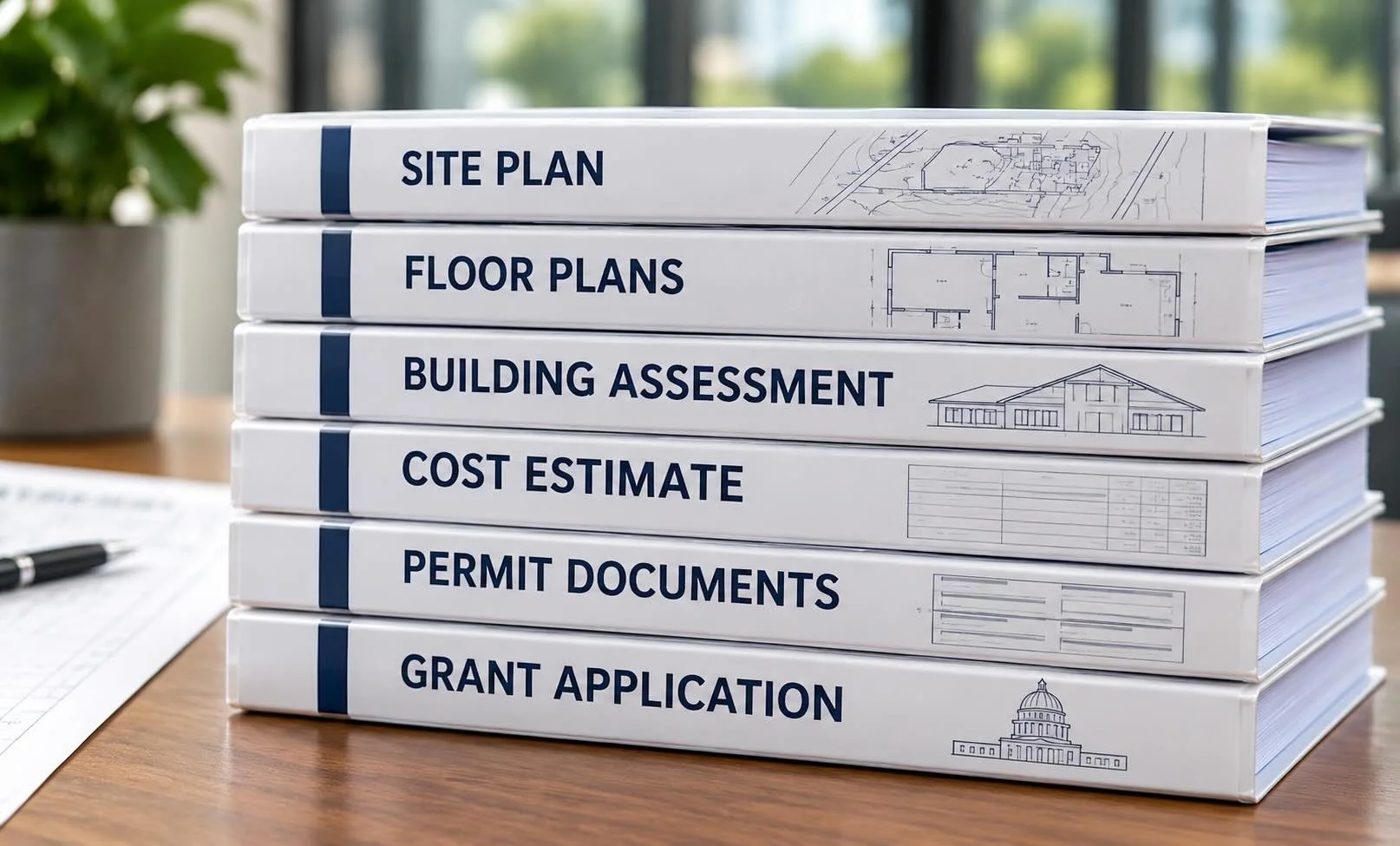
Grant applications vary considerably.
Some require only basic project descriptions and preliminary budgets during the initial application stage.
Others require detailed technical documentation before funding decisions are made.
Depending on the program, an applicant may need:
A description of the proposed project
Documentation of property ownership or site control
Existing building photographs
Preliminary architectural drawings
Site plans
Building condition assessments
Construction cost estimates
Project schedules
Environmental review documentation
Accessibility assessments
Evidence of community need
Documentation of matching funds
Organizational financial information
Evidence of applicable permits or approvals
Not every grant requires all of these materials, and some programs restrict which pre-award expenses are eligible for reimbursement.
Why Existing Building Documentation Is Important
For renovation projects, accurate documentation of existing conditions can be especially valuable.
Many older buildings have incomplete or outdated architectural drawings.
Without reliable measurements and building information, developing accurate renovation plans becomes more difficult.
Modern documentation technologies, including 3D laser scanning and Matterport digital building capture, can help architects document existing spaces and develop a clearer understanding of building layouts.
These technologies can also reduce the need for repeated site visits during early project development.
However, digital scans do not replace every form of field verification or professional evaluation.
Having accurate existing-condition information can make the architectural planning process more efficient and support more reliable project development.
9. Does Your Organization Have the Funding Needed to Complete the Project?
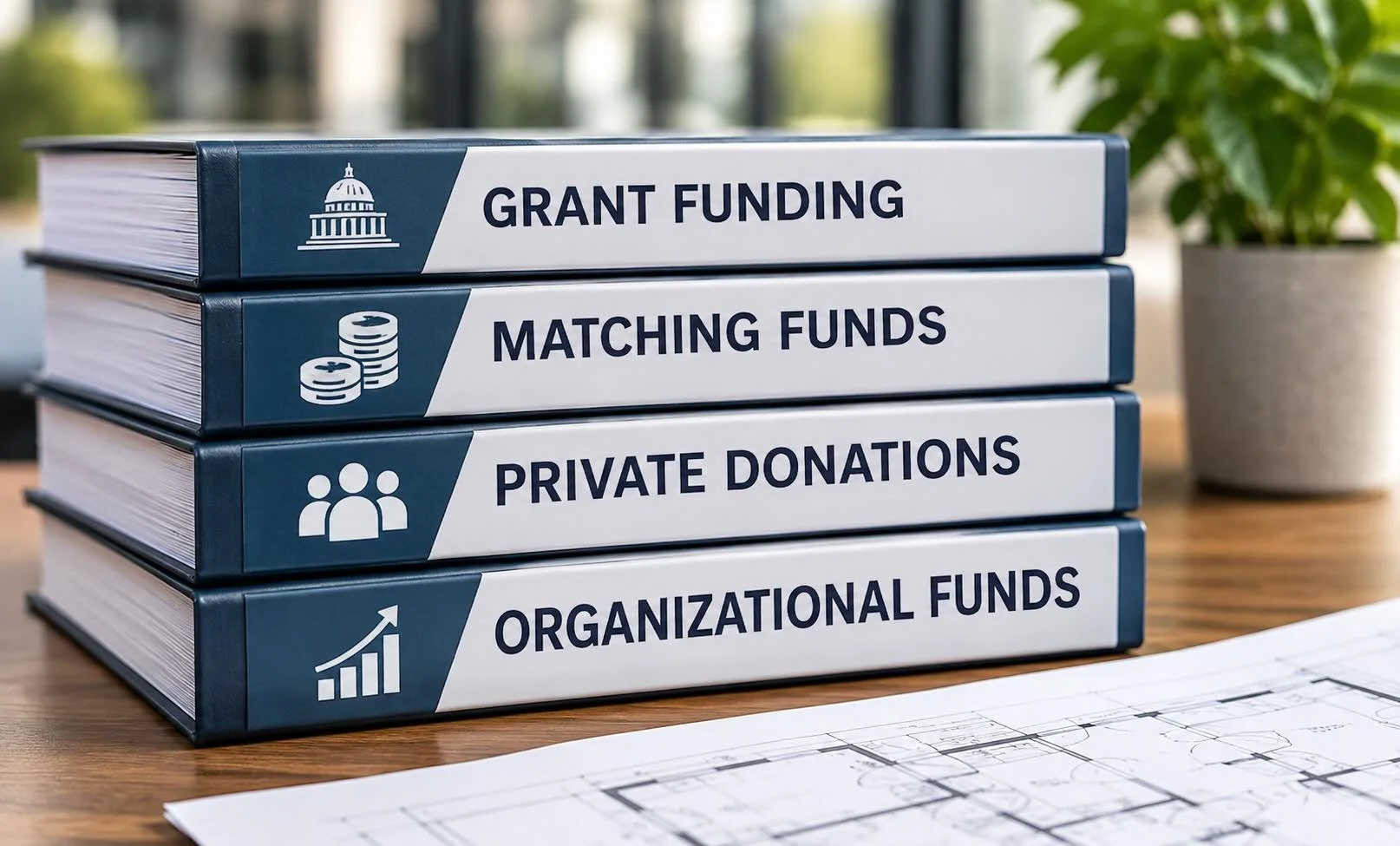
One common misconception about government grants is that they always cover the entire cost of construction.
In reality, many programs require applicants to contribute a portion of the funding.
This is often called a matching requirement.
Depending on the program, matching funds may come from sources such as:
Organizational reserves
Private donations
Local government contributions
Foundation grants
Other eligible funding sources
Loans or financing
Some grants cover a percentage of eligible expenses, while others provide a fixed maximum award.
Certain programs may provide substantial funding without requiring a traditional match.
The specific rules depend on the funding source.
Why This Matters During Architectural Planning
Suppose an organization is considering a $1 million building renovation.
If a particular grant program covers only 50% of eligible project costs, the organization may need to secure the remaining $500,000 through other sources.
An architect can help develop a project scope that aligns with the organization’s anticipated funding.
This may involve dividing improvements into phases.
For example:
Phase 1: Address critical safety, accessibility, and building infrastructure needs.
Phase 2: Renovate interior spaces and improve building functionality.
Phase 3: Complete future expansion or additional improvements.
Phasing can make a large project more manageable, but it must be coordinated with applicable code requirements and grant conditions.
Not all programs permit phased construction or changes to an approved project scope.
10. Is Your Project Timeline Realistic?
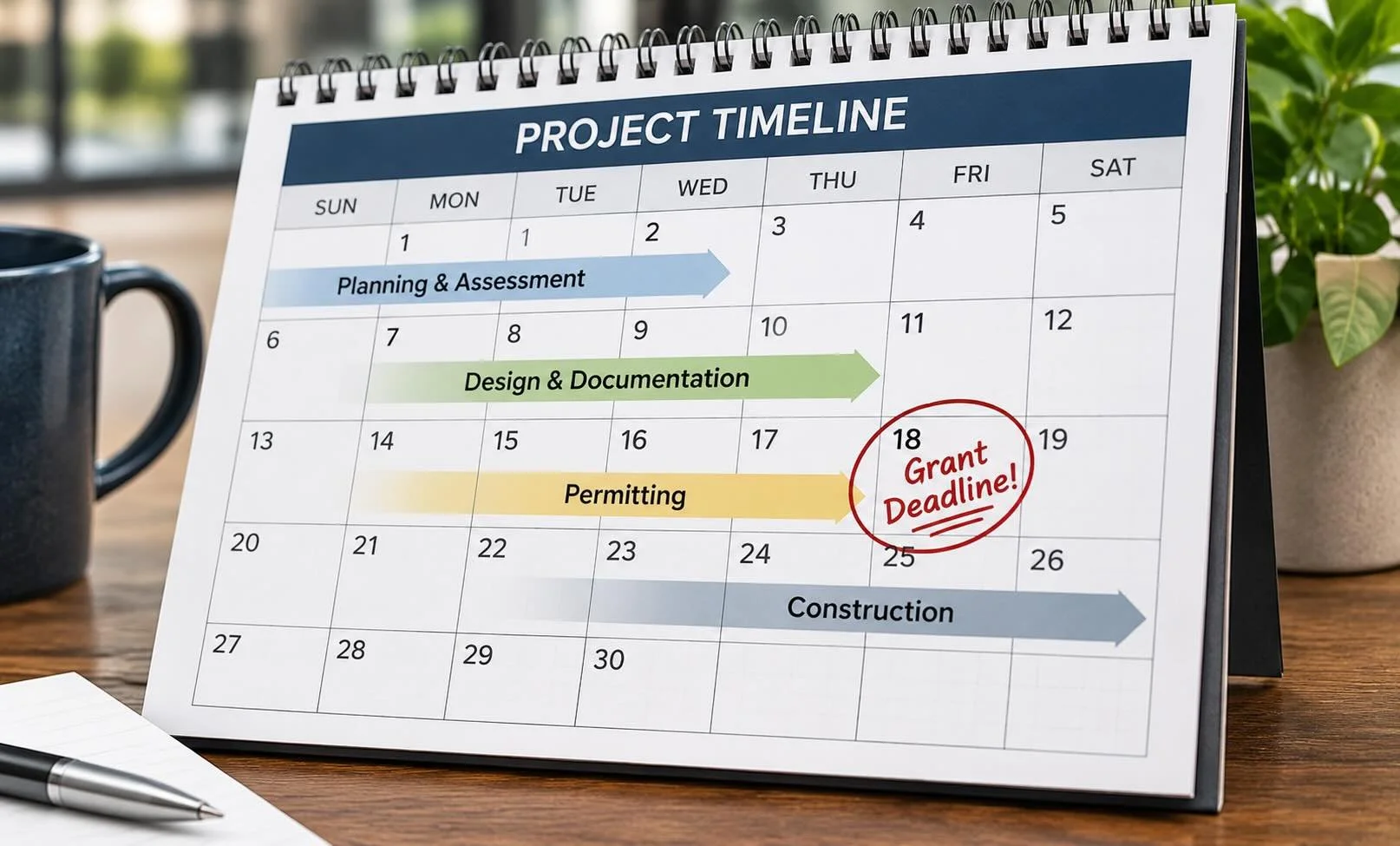
Government grant funding frequently comes with deadlines.
Depending on the program, applicants may be required to complete certain activities within specified timeframes.
These may include:
Completing environmental reviews
Finalizing architectural designs
Obtaining necessary permits
Beginning construction
Completing construction
Submitting reimbursement requests
Providing final project documentation
The time required to complete architectural design and permitting can vary substantially depending on the project’s complexity and jurisdiction.
A relatively simple interior renovation may move through design and permitting much faster than a major building expansion or change of occupancy.
Common Scheduling Challenges
Grant-funded projects can encounter delays involving:
Planning and zoning approvals
Environmental reviews
Historic preservation requirements
Structural engineering
Utility coordination
Contractor availability
Material procurement
Building department review
Unexpected existing conditions
Some federally funded projects also require specific environmental or historic preservation reviews before certain work can begin.
Starting construction or making binding commitments too early can create eligibility problems under some funding programs.
Practical Tip: Before applying, develop a preliminary project schedule that accounts for architectural design, engineering, approvals, bidding, construction, and grant administration.
11. Where Can You Find Government Grants for Building Improvements?

Finding the right grant is often one of the most challenging parts of the process.
There is no single government grant that applies to every building renovation.
Instead, funding opportunities are spread across federal, state, and local programs.
Here are several places worth investigating.
USDA Rural Development
The USDA Rural Development administers programs supporting eligible rural communities.
Its Community Facilities Direct Loan & Grant Program may help eligible public bodies, community-based nonprofits, and federally recognized tribes develop essential community facilities in qualifying rural areas.
Potentially eligible facilities include public safety buildings, community centers, and certain healthcare and educational facilities.
U.S. Department of Housing and Urban Development (HUD)
HUD administers programs supporting community development, housing, and neighborhood improvements.
The Community Development Block Grant (CDBG) program is one potential funding source for eligible community development activities.
However, CDBG funding is generally administered through state and local governments, and eligibility depends on the proposed activity and applicable program requirements.
U.S. Economic Development Administration
The Economic Development Administration supports qualifying economic development initiatives.
Certain programs may fund eligible public infrastructure and facilities that support economic growth, business development, and job creation.
State and Local Grant Programs
States and municipalities may offer additional funding opportunities related to:
Downtown revitalization
Historic preservation
Rural infrastructure
Community development
Public facilities
Energy efficiency
Economic development
For building owners and organizations in Washington, Idaho, Montana, and Missouri, researching state-specific funding programs can be particularly valuable.
State departments of commerce, community development agencies, historic preservation offices, and local economic development organizations are useful starting points.
Grants.gov
Grants.gov is a centralized resource for researching federal grant opportunities.
Applicants can search for available programs, review eligibility requirements, and find application instructions.
Keep in mind that not every federal funding opportunity is intended for building construction, and some programs restrict the types of organizations that may apply.
12. When Should You Involve an Architect in the Grant Process?
Ideally, before you submit the grant application.
One of the most common mistakes organizations make is waiting until funding has already been awarded before evaluating whether their proposed construction project is realistic.
Early architectural involvement can help answer questions that directly influence the application.
For example:
Is the existing building suitable for the proposed use?
What improvements are necessary?
Are there major code or accessibility concerns?
Will the proposed renovation require structural modifications?
What is a realistic preliminary construction budget?
How long might design, permitting, and construction take?
What drawings or supporting documents will be needed?
Are there more cost-effective ways to achieve the organization’s goals?
An architect may also help identify opportunities to reduce unnecessary construction costs through more efficient space planning or alternative design approaches.
What If You Haven’t Found a Grant Yet?
You don’t necessarily need to identify a specific funding opportunity before discussing your project with an architect.
In fact, developing a preliminary understanding of your building and renovation goals can help you determine what types of funding to pursue.
For example, a community organization might initially believe it needs a building expansion.
After reviewing the existing floor plan, an architect may discover that reconfiguring interior spaces could provide the additional capacity without expanding the building footprint.
That change could substantially affect the project’s budget, schedule, and funding needs.
The goal is to establish a practical project before investing significant time in grant applications.
13. Common Mistakes to Avoid When Applying for Building Grants
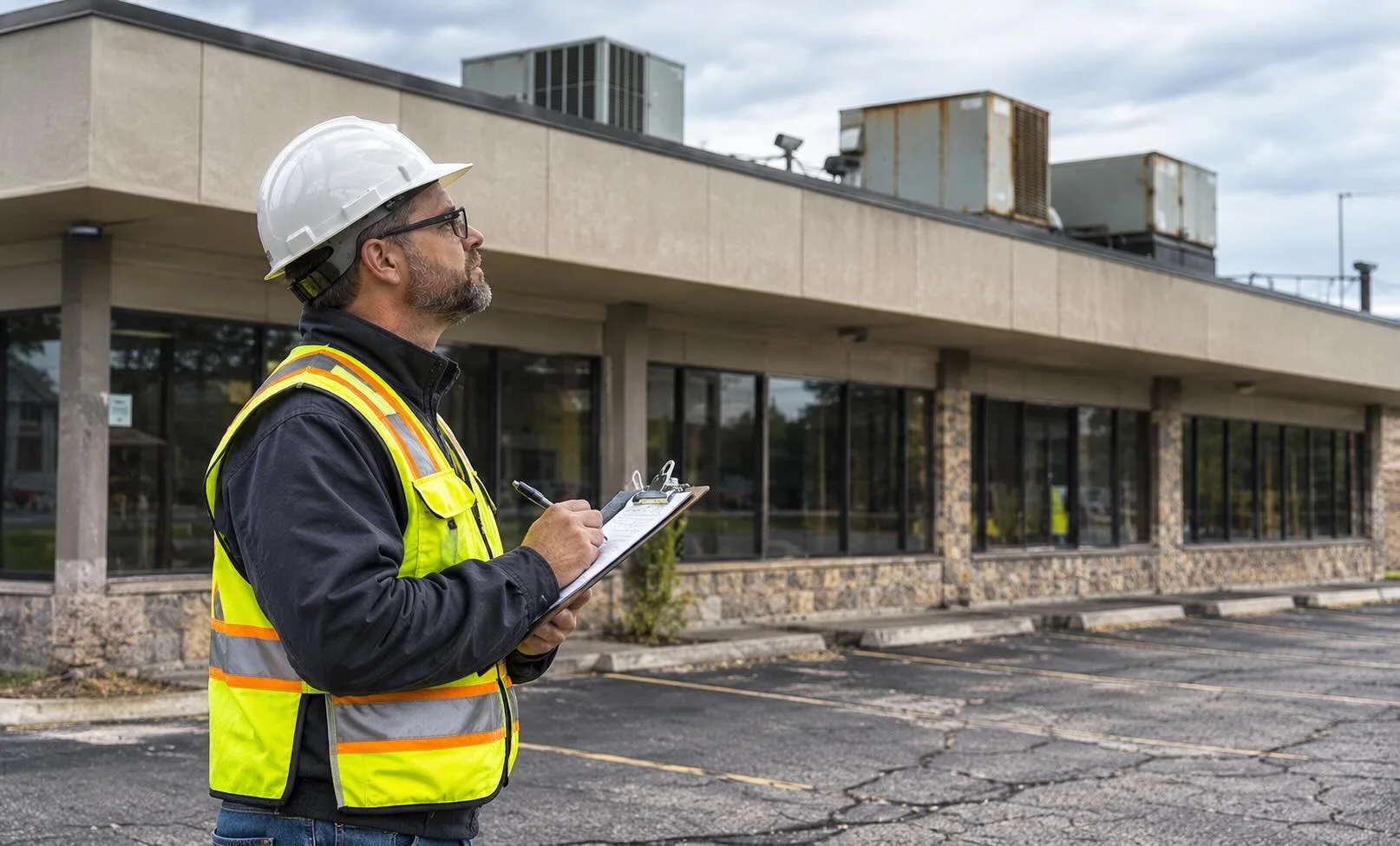
Government funding can create valuable opportunities, but several common mistakes can complicate the process.
Applying Before Understanding the Building
Without an existing-condition assessment, applicants may overlook major repairs or code-related improvements that significantly increase project costs.
Underestimating Construction Expenses
Preliminary budgets that omit professional fees, permitting, infrastructure upgrades, or contingencies can leave organizations with funding gaps.
Assuming All Improvements Are Eligible
Grant programs frequently restrict how funds can be spent. Some expenses may qualify while others do not.
Ignoring Accessibility and Building Codes
Renovations and changes in occupancy can trigger additional requirements that must be incorporated into the project.
Overlooking Matching Funds
Organizations may discover that they cannot accept or fully utilize an award because they lack the required financial contribution.
Starting Work Too Early
Certain programs restrict construction, purchasing, or other commitments before specific approvals have been obtained.
Failing to Plan for Long-Term Operating Costs
A building expansion may increase maintenance, utilities, staffing, and insurance expenses.
Even when construction is grant-funded, the organization must still be able to operate and maintain the completed facility.
Waiting Too Long to Begin Design
Grant deadlines can arrive quickly. Delaying architectural evaluations may leave insufficient time to prepare reliable project information.
The most successful grant-funded building projects generally begin with a clearly defined need, a realistic scope of work, and an achievable financial plan.
14. Government Building Grant Readiness Checklist
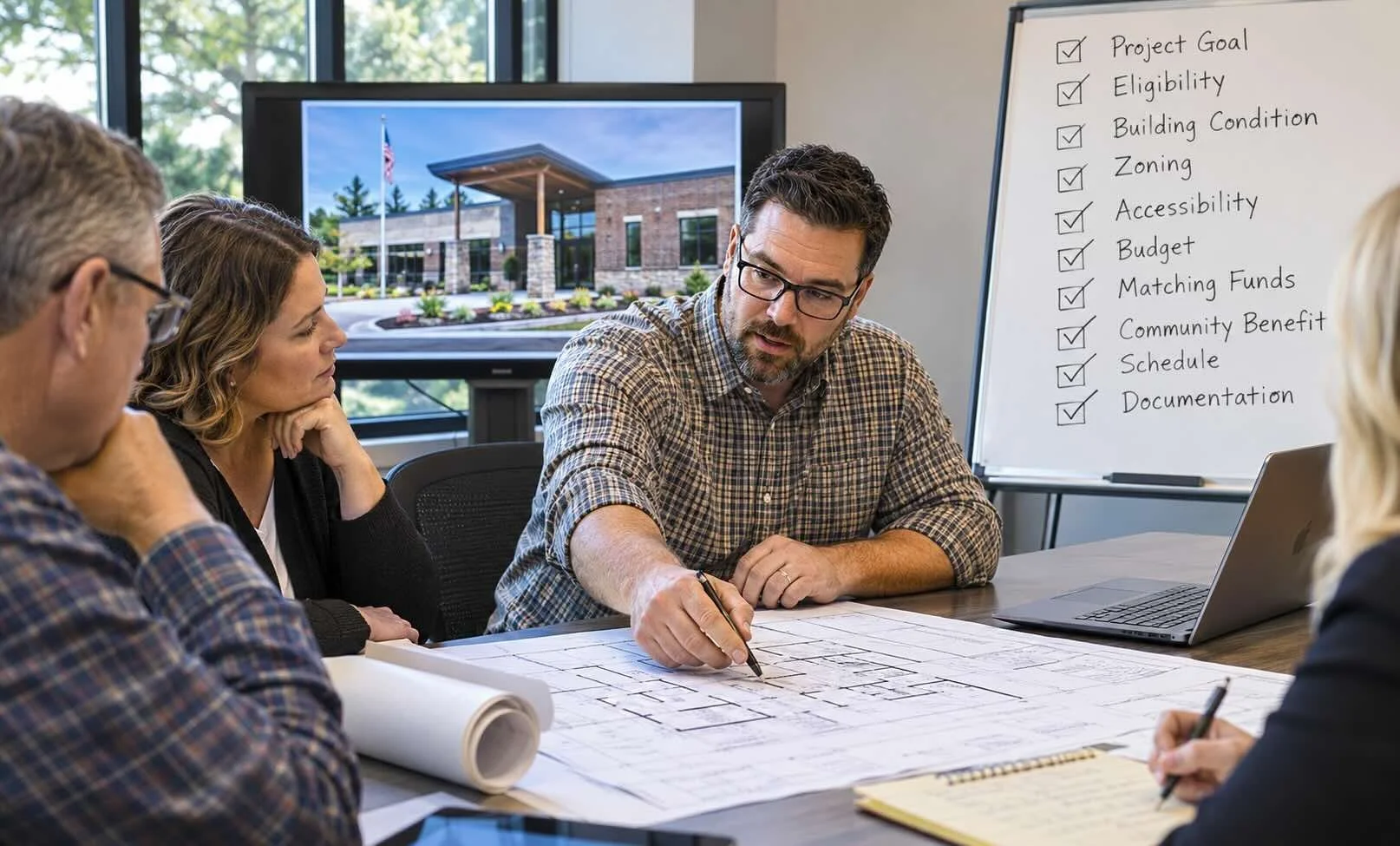
Before pursuing funding, use this checklist to evaluate whether your project is ready for the next step.
| Question | Why It Matters |
|---|---|
| Do we have a clearly defined project goal? | Establishes what the funding will accomplish. |
| Does our organization meet the grant’s eligibility requirements? | Determines whether an application can be considered. |
| Is the building or property eligible? | Some programs restrict property types, ownership, or locations. |
| Do we understand the building’s current condition? | Helps identify necessary improvements and potential obstacles. |
| Is the proposed use permitted by zoning? | Reduces the risk of pursuing an unapprovable project. |
| Have accessibility requirements been evaluated? | Helps identify required upgrades and associated costs. |
| Have major building code concerns been considered? | Prevents unexpected design and construction expenses. |
| Do we have a preliminary project budget? | Helps determine the amount of funding needed. |
| Can we provide required matching funds? | Establishes whether the organization can financially participate. |
| Can we demonstrate community benefit? | Supports the project’s justification and funding objectives. |
| Is the project schedule realistic? | Helps ensure grant deadlines can be met. |
| Do we have the necessary supporting documentation? | Improves application completeness and readiness. |
| Have we reviewed environmental and historic preservation requirements? | Helps identify potential approval requirements before work begins. |
| Have we consulted an architect or appropriate design professional? | Helps establish whether the proposed project is technically feasible. |
You don’t necessarily need every answer before beginning your grant research.
However, the more information you gather early, the better prepared you’ll be to evaluate funding opportunities and move forward when an appropriate program becomes available.
15. Frequently Asked Questions About Government Building Grants
-
Yes. Certain government grant programs provide funding for eligible building renovations, including public facilities, nonprofit buildings, historic properties, and community infrastructure. Eligibility depends on the funding program, applicant, property, and proposed improvements.
-
Some programs support qualifying commercial improvements, particularly those connected to economic development, downtown revitalization, historic preservation, or energy efficiency. However, many government construction grants are limited to public entities, nonprofits, or specific eligible activities.
-
Potentially. Some programs allow eligible nonprofits to receive assistance for building acquisition, construction, or renovation. Applicants should carefully review ownership requirements, eligible expenses, and restrictions on property use.
-
Not always. Some programs require only preliminary project descriptions and budgets during the initial application process. Others may require site plans, conceptual drawings, building assessments, or more detailed design documents.
-
Certain grant programs allow eligible architectural and engineering expenses to be included in the project budget. However, reimbursement rules vary, and expenses incurred before grant approval may not qualify.
-
Yes. Older buildings may qualify for programs supporting rehabilitation, accessibility, public services, historic preservation, or community development. However, the building’s age alone does not establish eligibility.
-
Not necessarily. Some programs require ownership, while others may permit applicants with qualifying long-term leases or other forms of site control. The requirements vary by funding source.
-
Architects can help evaluate project feasibility, identify necessary improvements, develop preliminary budgets, and prepare technical documentation. Some firms may also help clients identify potential funding opportunities or coordinate with grant specialists. However, grant research, application preparation, and grant administration should be discussed separately to determine which services are included.
Final Thoughts: A Grant Opportunity Is Only as Strong as the Project Behind It
Government grants can open doors for organizations and communities that might otherwise struggle to afford necessary building improvements.
But securing funding is only one part of creating a successful project.
Before submitting an application, it’s important to understand what your building needs, what improvements are realistically possible, how much the work may cost, and whether the proposed project aligns with the funding program’s requirements.
An architect can help bring those pieces together.
From evaluating aging facilities and identifying accessibility concerns to developing conceptual designs and preliminary construction budgets, early architectural planning can turn a general idea into a more clearly defined, achievable project.
And even if your project isn’t ready for funding today, understanding the building’s condition and potential is a valuable first step toward making it happen.
Planning a Grant-Funded Building Project? Let’s Talk.
At Revival Architects, we believe great buildings have the power to strengthen communities, support essential services, and create opportunities for the people who use them.
With nearly 20 years of architectural experience and projects throughout Washington, Idaho, Montana, and Missouri, our team understands that every building comes with its own challenges, opportunities, and possibilities.
Whether you’re exploring improvements to an aging fire station, planning a nonprofit facility renovation, expanding a community building, or evaluating an existing property for future use, we’re here to help you understand what’s possible.
From preliminary building assessments and feasibility studies to architectural design and construction documentation, we can help you develop a practical plan that moves your project forward.
Have a building project in mind? Let’s explore what it could become.
Disclaimer: This article is intended for general informational purposes only and does not constitute legal, financial, or grant eligibility advice. Funding opportunities, program requirements, and building regulations vary by location and may change over time. Consult the applicable funding agency and qualified professionals before making project or financial commitments.